
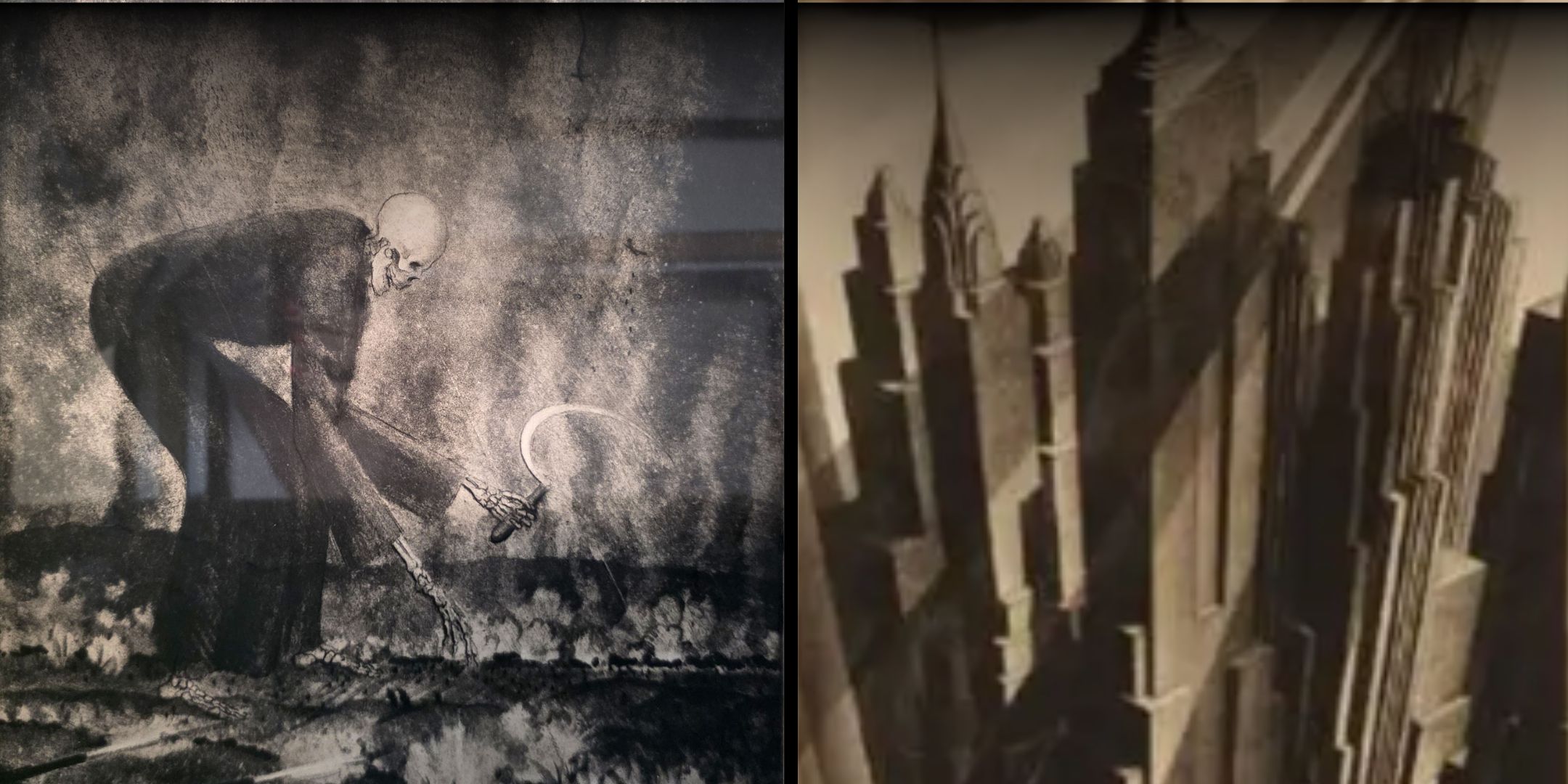
Did Mrs. William Clark Shepard commission an intaglio print from Samuel L Margolies in 1968?
Let me first begin by introducing the characters:
Samuel L. Margolies
was a New York artist who could arguably be considered the father of aquatint (an intaglio printmaking technique that creates tonal areas rather than lines). He began his career exhibiting oil and watercolor paintings in the late 1920s before turning to intaglio printmaking during the Great Depression to reach a broader audience with affordable artworks. Sam achieved national recognition for his aquatint landscapes and dizzying views of Manhattan skyscrapers, and he served as an instructor for the Works Progress Administration’s (WPA) Federal Art Project starting in 1935.
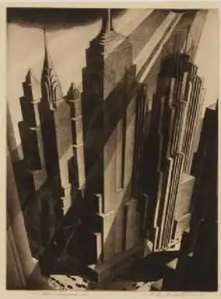
Man’s Canyons, Etching and aquatint on cream laid paper, 1936
His primary career path shifted in 1939 when he left the WPA to become a circuit designer for the Bundy Corporation to assist with WW2 efforts, though he continued to make prints into the early 1940s and teach etching into the 1950s. Sam was based in New York for much of his life, specifically residing in Hollis, Queens, during the mid-1930s. He was also active in the Trenton area in the early 1940s, where he helped organize and served as an officer for a local Marine Corps League detachment in 1943. He eventually retired and relocated to Florida, living for many years in Jensen Beach before passing away in Fort Pierce in 1974; but not before writing a series of letters to Ernie Lyons at the Stuart News which were subsequently published with editorial recognition and support from Ernie himself.
Sam also gave 70 of his original-signed prints as a gift to the HSMC in 1968 during his first exhibition at the Elliott and included in the collection are several unique works, one of which is titled The Reaper. (All of his works will be on exhibit this year in the Elliott Forum Gallery alongside a WPA deep dive, check back in December). The point here is that Sam was one of those people who excelled at everything he turned his mind to, and he ended up here in Martin County, just like so many other visionaries.
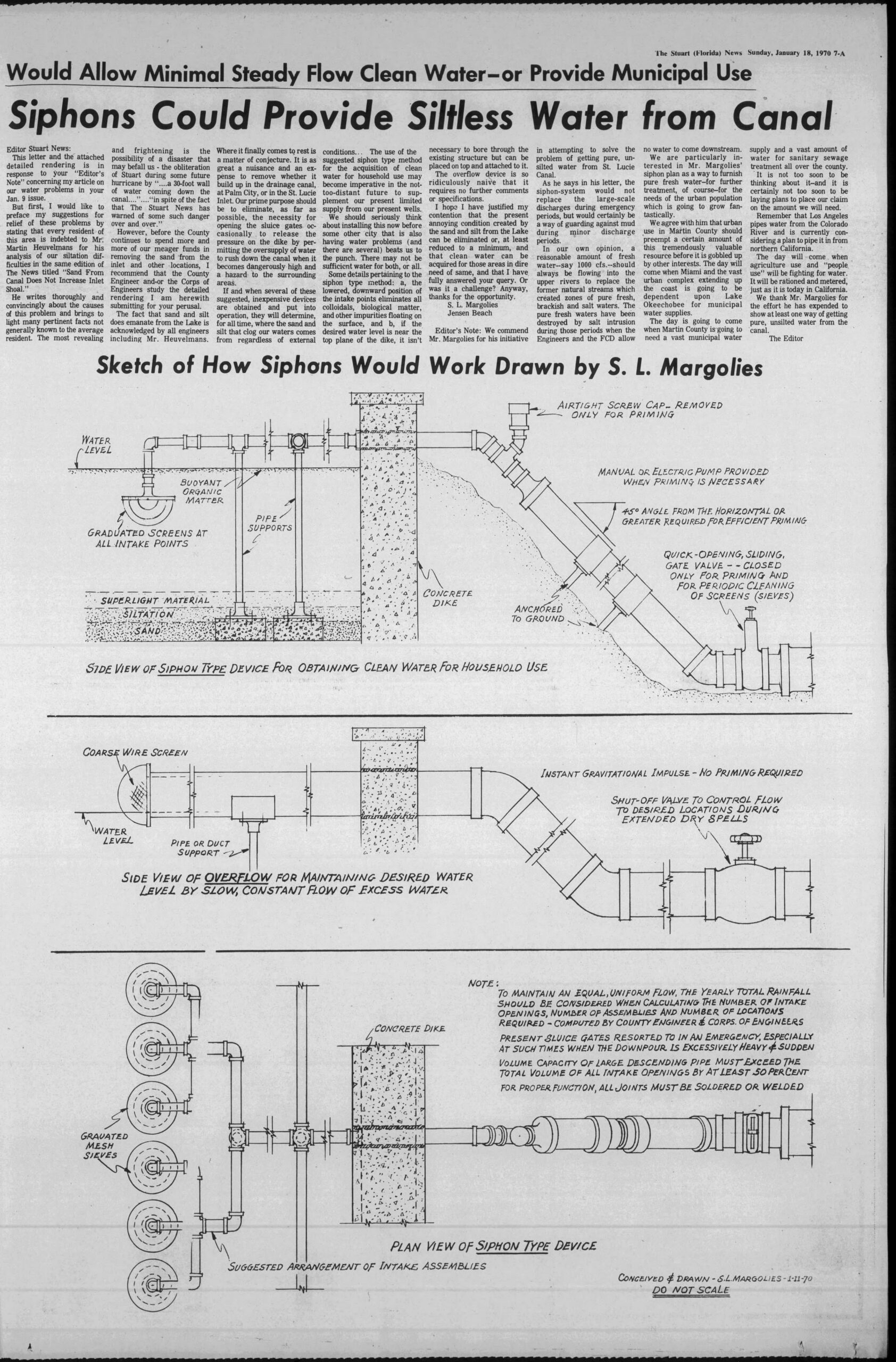
The Stuart News, January 18, 1970, pg 7
Now on to the next person in this story…
Mrs. William Clark Shepard
is a name revered around here because of her legacy of involvement in the early days of the Historical Society. She served many roles in those early days of opening and kitting out the House of Refuge, but her actual involvement began years before in 1949 when CB Arbogast dropped his lease-to-own option and the House began decaying in earnest due to disuse and vandalism. Anne and William Shepard investigated renovating the House as a private residence. Thankfully, it didn’t suit their needs, and they continued living at their parents’ house, the former Perkins estate at the foot of the Roosevelt bridge on the south-east Side, the now location of Shepard’s Park. After their house burned in the late 50s, and William passed in 1964, Anne moved over to the island permanently. Her assistance with the writing of the History of Martin County as well as her role as chairman of the 1976 restoration committee cemented her presence as an invaluable part of the Historical Society’s team. She even donated locally made historical bricks from the burned-out ruin of her family’s home to restore the House of Refuge chimney, (it’s always a fire or a flood in history, isn’t it.) turning her personal tragedy into a community treasure. A great friend of Janet Hutchinson, Anne Young Shepard spent her final years giving of her immense intellect, labor and charming personality to the House of Refuge and the Elliott Museum.
Now for the Mystery:
There are many references in Janet’s Letters to Members 1966-1992 to Anne Shepard and the hijinks the members of our Historical Society used to get up to and there are many essays written on the art exhibitions Janet held at the Elliott. Janet’s background in the NYC art scene as well as Emmiline K. Paige’s editorial juggernaut of a career at The Villager was an attraction for so many artists to come and visit Stuart’s beautiful shores for a chance to exhibit at our institution. In 1968, Sameul L Margolies was hosted at the Elliott for a solo show prompting his incredible donation of prints. (I hate packing up an exhibit too, so sad) Included in this gift was a copy of The Reaper.
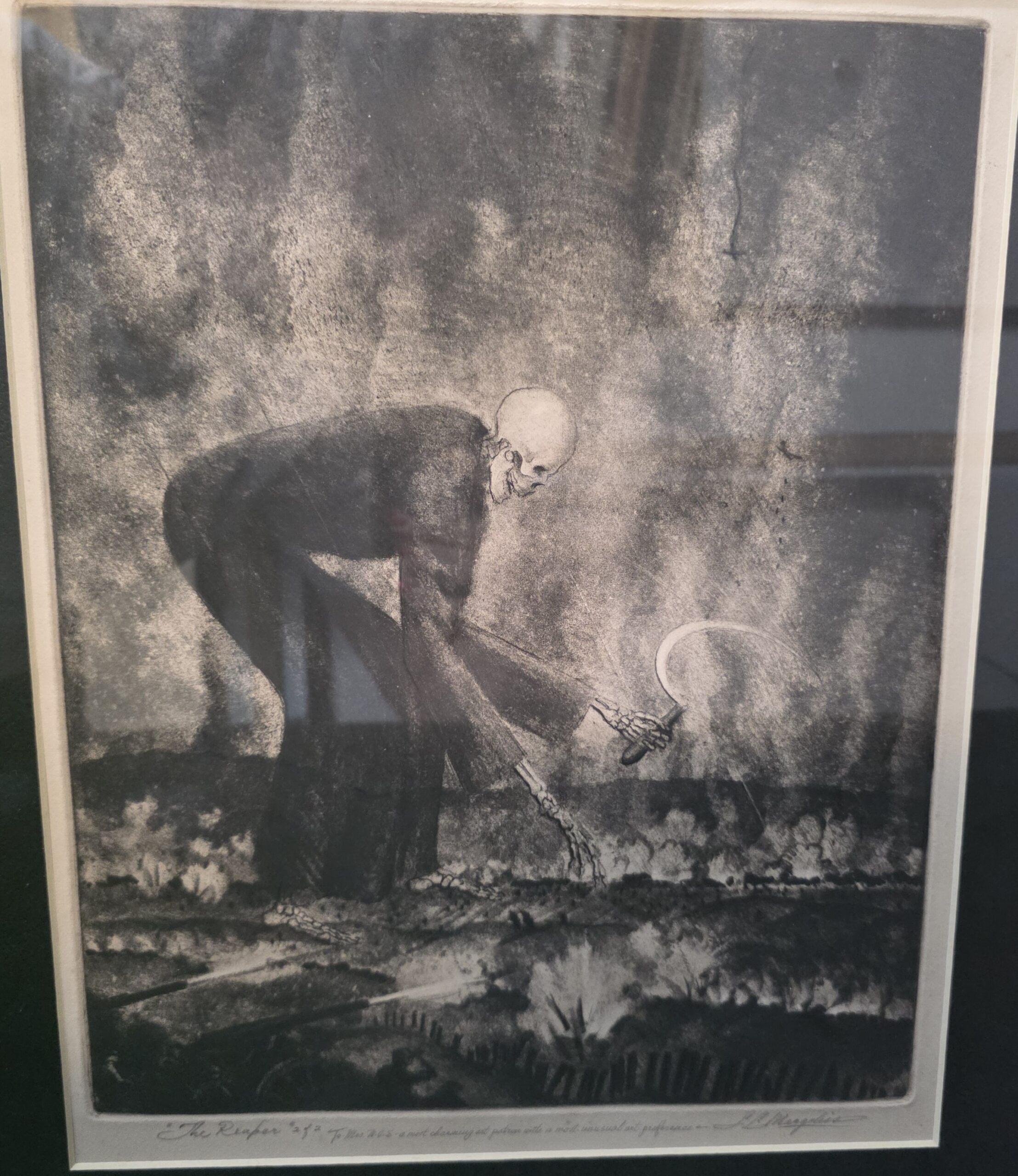
The Reaper, Etching and aquatint on cream laid paper, unknown date.
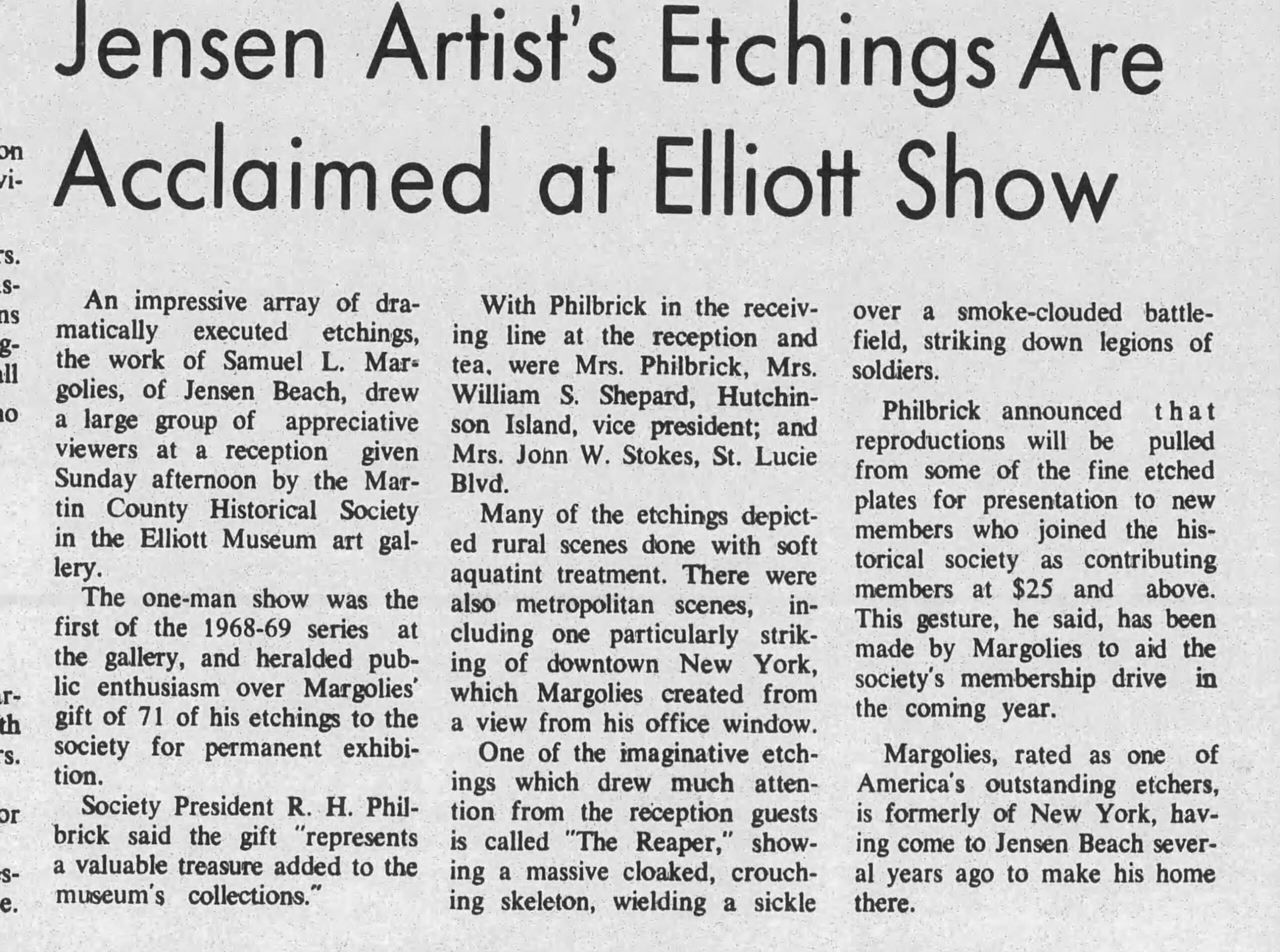
The Stuart News, October 17, 1968, pg 25
Notice the dedication at the bottom?

Close up of the dedication on The Reaper
2/2 to Mrs. WCS, a most charming art patron with a most unusual art preference. So, there’s the mystery. Did Sam create this etch for Anne? If so, what was the motivation and how does this intimate, highly unusual topic fit into his larger career? This work is practically unknown in his catalog, large collections of which are hosted at the Smithsonian, the Library of Congress, the Met and other large organizations’ . Only the Elliott has The Reaper though…and after almost 60 years, it’s going to see the light of day again soon.